May 7
Reference
Every designer should be a student of copyright and trademark laws. These laws not only protect your work and mine, they protect the work of others—everyone from artists and designers to corporations and public institutions. Part of our job is to be certain that the illustrations and photographs we incorporate into our work do not infringe on existing copyrights or trademarks. Or, if they do, that they are properly recognized and documented.
It is not as simple as it looks. Here, for example, is a technical wiki for the royalty-free illustration and photography site istockphoto.com. It is designed to help the those who submit work for sale to understand what can and cannot be distributed under royalty-free guidelines. You might be surprised at the scope of the imagery that cannot be used without the permission of its owners.

The istockphoto wiki on copyright and trademark issues ...
Copyright basics...
Trademark basics...
In the Ideabook Design Store: Design-It-Yourself: Graphic Workshopa...
May 5
Web Design
Thanks to Chris Miller for pointing us to this interesting navigational approach by EffectiveUI. I like the idea that everything carries near-equal weight. Kind of like a book table of contents—it displays the linear layout but it also gives you a simple, in depth way to pick and choose.

The EffectiveUI interface...
NEW in the Ideabook Design Store: Tintbook CMYK Process Color Selector...
May 2
Web Design
Here is a nice example of how to use a silhouette as a transition from one section of a web page to the next.

The example is at the bottom of the page...
In the Ideabook Design Store: The Copywriter's Handbook...
Apr 30
Photography
Great. I have a new addition to my list of delusions—next time you see a photograph of a tiny little, toy-like model of a “real” scene, look again. It may not be a model at all, it may be the real thing edited using the “fake tilt-shift” effect in Photoshop (“real” tilt-shift is accomplished using a camera lens by the same name).
This is an illustration technique you will definitely want to add to you toolbox. The effect is achieved by changing the depth of field (among other things).

A set of examples...
More examples...
A Photoshop tutorial...
In the Ideabook Design Store: The Color Harmony Guide...
Apr 28
Graphics Tech
If you design web sites and have not come across the Blueprint CSS Framework, I recommend you take a look to see if any of its parts and pieces could be of use to you. The framework includes a layout grid, basic typographic styles, and underlying code contributed by a coalition of high-powered CSS experts.
I know there are folks who think that if you don't create everything from scratch that you are somehow “cheating”—I'm not one of them. To me, a well designed grid or template is like any other tool—a smart way to amplify productivity.

The Google Blueprint CSS framework...
An introduction by Jeff Croft, one of the original contributors...
A demonstration of the web framework (all of which can be edited)...
A demonstration of the typographic styles...
In the Ideabook Design Store: Creative Business CD-ROM...
Apr 25
Shopping
I have an affinity for illustration. I can't count the times a talented illustrator has made me look like I knew what I was doing.
Truth be told, I am more likely to hang a poster than a painting. Here are two sites where you can buy originals and prints of published and unpublished works by both well-known and not-so-well-known illustrators.

illogator.com...
and Thumbtack Press...
In the Ideabook Design Store: Graphic Artists Guild Handbook: Pricing & Ethical Guidelines...
Apr 23
Learning
I have two very talented sons in design school—in the last few years their education has been the catalyst of many interesting conversations. As they unfold the intricacies of the business of communications design and ask questions, I must think through and articulate theories and practices I have long taken for granted.
This month on ideabook.com I want to share one of the more controversial issues with you—regarding the concept of self-expression. Even if you don't think this is something you would normally take the time to read, please take a few minutes to read it through and to share your thoughts about it with me.

Commercial graphic design is not self-expression...
In the Ideabook Design Store: Brenner Pricing Tables...
Apr 21
Illustration
It wasn't long ago that graphic design was as much craft as it is intellectual exercise. You could argue that there is craft to using computers and software, but the physicality of most designer's daily work is not what it once was.
So it is refreshing (and nostalgic) to see great craft being practiced. Thank you to my friend Sheila Hanchard who points us to the work of Russian animator Alexander Petrov. Though he is best known for his artistic achievements—among others, his adaptation of The Old Man and the Sea—he is the director of several much-acclaimed, anti-conventional spots for United Airlines.

One of the United Airline spots—titled The Rose...
A clip from The Old Man and the Sea...
The Canadian animation studio Petrov works through, click Welcome > Directors...
And a fascinating documentary of Petrov's pastels on glass technique...
In the Ideabook Design Store: Task Force Clip Art...
Apr 18
Photography
The photographs at Notes from the Road are stunning—they're captured using a traditional large format sheet-film camera. But the layout is why I'm pointing to the site. Though the understated, neutral palette and the type treatments are well worth noting, what caught my eye was how the bottoms of the anchor photographs are feathered into the article text—a simple but effective technique for integrating two dissimilar elements. (You'll have to dig deep to find the context of the Hokey Pokey bumper sticker.)

Erik Gauger's Notes from the Road...
Another nice example...
About the author, designer, illustrator, photographer...
In the Ideabook Design Store: Moleskine Notebooks...
Apr 16
Illustration
Illustrator is to artist as reporter is to poet. The reporter uses words to communicate news—the poet defines his own purpose. To my function-focused mind there is nothing quite so compelling as an illustration that communicates the idea more persuasively than words could. David Gothard is an illustrator with a wonderful talent for marrying concepts to images.

Watch this...
Gothard's portfolio...
His blog...
In the Ideabook Design Store: Art Parts Clip Art...
Apr 14
Reference
Guy Kawasaki makes it look easy. This time he, Will Mayall, and Kathryn Henkens (all principles of Nononia, Inc.) have birthed Alltop—a table of contents to “all the top” stories on the web.
What type of semantic computational algorithm could possibly make such a subjective judgment? The human brain. Yup, these industry innovators propose that what we need is not another regurgitation of every other machine-picked list, but a lineup selected by people.
“The bottom line,'” as they describe it, “is that we are trying to enhance your online reading by both displaying stories from the sites that you’re already visiting and helping you discover sites that you didn’t know existed. In this way, our goal is the 'cessation of Internet stagnation.'”
We are honored to be included on the Design page.

The home page with all the categories...
The Alltop.com Design Category—LOOK, there's pageplane.com next to the kid with the circle on his shirt...
In the Ideabook Design Store: FontHead Typefaces...
Apr 11
Ideas 101
This simple example, to me, represents the best of design. These folks are experts at designing wine labels—a fairly narrow niche. But they studied their subject and found room to innovate.
The idea is “Wine Find”—a loose, perforated portion of the label that can be removed by the seller or customer as a reminder of the exact brand and vintage of the bottle they purchased.
That's the type of jolt thinking that gets me pumped—I can immediately think of several ways to translate the same concept to other media and formats.

The Wine Find label (450KB PDF)...
Stellar label designs and a better photograph of a Wine Find label (1MB PDF)...
New in the Ideabook Design Store: Creative Advertising...
Apr 9
Print Design
I'm slightly depressed. It seems as though, at every turn, I come upon a designer whose work knocks me into next week. This time it's Fabien Barral, a guy who claims to be living in the middle of the French countryside—no comment. Seriously though, his deft mix of typography and old/new design elements is very interesting. Another one for my “when I grow up I wanna design like” list.

Fabien Barral...
More Fabien Barral...
Okay Fabien Barral, you're starting to get on my nerves...
In the Ideabook Design Store: Getting It Printed...
Apr 7
Color
UNIQLO is a company based in Japan that is fairly new to the United States. It positions itself at a provider of “high quality, basic casual wear at the lowest prices in the market.” Their site was designed by Yugo Nakamura who employs the color palette Roger Black made famous (at least to me): red, white, and black. It relies heavily on a combination of stark contrast, powerful typography, and bold images. Love it.

The is the company's site...
This is the site used to tease the arrival of the store in NYC...
In case you missed it previously, Roger Black's page...
In the Ideabook Design Store: Getting It Printed...
Apr 4
Graphics Tech
Well, kind of. Now you can introduce your friends and family to the magic of Photoshop. The link leads to a test drive of Adobe Photoshop Express, a scaled back, happier version of the tool so many of us have grown to know and love. You simply double-click an image to access basic Photoshop tools for editing Basics, Tuning, and Effects.
But the real value of this offering is the opportunity it affords us to recount the heights and valleys of our own experience with the “real” Photoshop (don't forget to warn your audience that using the real version requires decades of study and membership in stuff like professional guilds and unions—no sense stirring up a bunch of unnecessary competition).
Think of the hours you'll spend explaining layers, recalling the day you applied your first drop shadow, and communicating the anguish of creating 86 layers you didn't bother to label.
To friends and family—run.

Go here and select “My Photos”...
More details from the blog of Photoshop's Senior Product Manager, John Nack...
In the Ideabook Design Store: Before & After: Graphics For Business...
Apr 2
Photography
There is a great lesson here. Photographer Andrew Zuckerman photographed animals commonly seen in the wild and brought them into a studio and photographed them on an infinity cyc (a seamless, white cyclorama used to focus all attention on the objects placed on it). It helped him to capture images that are very different than what you normally see.
My point is this: when you take a subject and isolate it from the normal ways in which it is described and shown, you are likely to find a new way of communicating it.

Creatures by Andrew Zuckerman...
Zuckerman's portfolio...
In the Ideabook Design Store: Design-It-Yourself: Graphic Workshop...
Mar 31
Mind Vacations
Since the inception of the box, scheduling has played a significant role in the success or failure of television programming. If you are hungry for something to watch, you click around until you find something you want to watch or settle for watching something that is “on.”
Here comes the future. Fancast.com is a venture by behemoth Comcast that offers, at this writing, over 200 television series. Each episode of which can be viewed whenever you choose to view it. I guess this is good news—with no limits on when you watch, the quality of what you are willing to spend time watching should be raised. Maybe. I'm guessing there will still be people who will watch Doogie Howser, M.D. on purpose.
Now, an OFFICIAL DISCLAIMER: don't blame Chuck Green if you get canned for watching reruns at your desk—I warn you, there are fifty episodes of the Twilight Zone on this thing.

The current fancast.com menu...
Vintage Twilight Zone...
This is also happening on hulu.com...
In the Ideabook Design Store: Before & After: Graphics For Business...
Mar 28
Learning
If you are a friend of this page, you know I don't spend a lot of time waxing philosophical. But a recent experience brought this to mind and, if you will indulge me this once, I'd like to share it with you.

Victor Kryston, Dill Cole, and The Eucalyptus Tree Studio...
In the Ideabook Design Store: Getting It Printed...
Mar 26
Web Design
Sometimes it happens this way. You get started and find a solution within a solution. I'm guessing this started out as a web layout and someone had the clarity to say, why not publish it as a sketch? To me, the finished product is even more interesting than where it was headed.

1trickpony...
In the Ideabook Design Store: Before & After: Page Design...
Mar 24
Ideas 101
It would be difficult to overstate the importance of restraint in communications design. It is so easy to add elements to a layout that it is often difficult (for me) to know when to stop. I have struggled with it every day of my career—in print and online. Much of great design is brilliantly complex, much is brilliantly simple—at both extremes the key is knowing when enough is enough.
Here are two sites designed by Blue River Interactive Group. To my eye, both reveal a keen understanding of this art of restraint.

The KP Public Affairs cover...
Inside KP Public Affairs...
The Heath Ceramics cover...
Inside Heath Ceramics...
In the Ideabook Design Store: The Desktop Publisher's Idea Book...
Mar 21
Web Design
Watch how the folks at Erowe Design stage their portfolio as three dimensional objects. And how they feature a closeup of one significant element of the design. It is one way to simulate the tactile experience of holding the pieces. Click on “PORTFOLIO” then “FINANCIAL&rdquo for an example. Notice how the position and lighting reveals the gloss coating applied to the cover headline. Nice.

Click on “PORTFOLIO” then “FINANCIAL&rdquo for an example...
In the Ideabook Design Store: Design-It-Yourself: Graphic Workshopa...
Mar 19
Marketing PR
If you think the disciplines of communications design are peaking, think again. The years ahead promise a perpetual need for re-invention—an insatiable appetite for re-defining and re-presenting ideas, organizations, products, services, and the people who represent them.
No where is the current need more pronounced than in the world of newspapers. The New York Times' “First Look” pages offer a peek at how The Times is attempting to marry the best of static linear layout with the expectations of interactivity and multimedia.

First Look at The New York Times...
NEW in the Ideabook Design Store: Tintbook CMYK Process Color Selector...
Mar 17
Print Design
In his article for The New Yorker titled “The Social Life of Paper,” “Blink” author, Malcolm Gladwell proposes that the only reason paper is viewed as an antiquated medium is because, “We have been tripped up by a historical accident of innovation, confused by the assumption that the most important invention is always the most recent.” Had the computer come first, he speculates, we would think of paper differently.
I point to this because I think we can get so wrapped up in the beauty and flexibility of the online medium that we can loose track of the importance of the conventional form of communications—collateral, correspondence, direct mail, and so on. If you did not read it when it originally appeared, take a look, it is worth reading.

The Social Life of Paper, Looking for method in the mess by Malcolm Gladwell...
The article in PDF form...
Gladwell's page...
In the Ideabook Design Store: Templates for InDesign, QuarkXpress, or PageMaker...
Mar 14
Typography
To me, this is a design painting. You have to step back from it to see what all the brush strokes add up to. You can argue that the technique is an impediment to reading, but it certainly made me take notice.

The Schwarzdesign blog...
An English version (via Google Translate)...
Google Translate (in case you have not used it)...
In the Ideabook Design Store: The Color Harmony Guide...
Mar 12
Graphics Tech
New York Magazine challenged five designers to come up with a cover for their “Best of New York” issue. One of the answers came in the form of a wall of words crafted by Gretel, the home of Greg Hahn—a smart concept with just the right contrast to the nameplate.
The question? Is the cover real or computer generated? I must admit I could not be certain. So I asked. (To see the answer, click comments.)

The New York Magazine cover by Gretel...
Other entrants...
The Gretel site...
In the Ideabook Design Store: The Copywriter's Handbook...
Mar 10
Marketing PR
“It has nothing to do with income, nothing to do with education. It has to do with a desire to understand, a desire to try, a desire to push whatever envelope you're interested in.”
That is how marketing guide Seth Godin describes the curious nature—a way of thinking I have learned to understand and embrace in recent years. (Ironic to hear it from Seth—years ago he called me with an idea for collaborating on a project and, if I remember correctly, I spent most of the conversation stomping on his curiosity. Unfortunately living and learning is the cost of admission.)
This is one of many brilliant short films by Nic Askew. Brief, but often profound vignettes with a wonderful mix of thinkers.

Seth Godin on curiosity...
Lynne Franks, An eye in the storm...
Nic Askew's Monday 9am TV...
In the Ideabook Design Store: Graphic Artists Guild Handbook: Pricing & Ethical Guidelines...
Mar 7
Illustration
Last month I mentioned David Ogilvy's penchant for writing copy in the form of a story. Here are some excellent examples of the genre illustrated by James Bingham. What better way to communicate your idea than to spin it into a memorable anecdote or story.
Once you've seen this you can spend the rest of your morning (sorry) looking through Thomas Clement's American Art Archives—a treasury of illustration and advertising history.

James Bingham's storytelling illustrations...
Here is the index of illustrators on the American Art Archives...
In the Ideabook Design Store: Creative Business CD-ROM...
Mar 5
Marketing PR
Here's some fascinating advertising history—an archive of many/most of the ads and collateral created for Apple since the first ad was produced in 1976. It is not only a history of Apple, it offers an interesting record of design trends and styles.
Seeing these ads gave me reason to call a dear friend, Charlie Clark, who was an art director on the Apple account for a year or two at Chiat/Day. He and his wife, copywriter Leslie Clark, have been back in Virginia for years now after a decade or two working for some of the world's top agencies. (If you are looking for a top advertising team, they are going strong as ever—brilliant, beautiful stuff.)

A history of Apple advertising...
In the Ideabook Design Store: Task Force Clip Art...
Mar 3
Web Design
As Christian Crumlish, curator of Yahoo's Design Pattern Library puts it, "Design patterns mean different things to different people." Suffice it to say, to a communications designer, they offer a look at (and code for) the structure and layout of the parts and pieces of web interface design. They are the best practices for creating elements such as tabs, forms, and selection devices for helping the user move around, browse content, and otherwise interact with a web page. The idea of the library is to ease the development of wheels that have already been invented and to propagate the use of proven practices.
There are many such libraries. Here are a few to get you started (I'd love to hear about others you have found useful).

The Yahoo Design Pattern Library...
A site for a book titled, The Designing Interfaces: Patterns for Effective Interaction Design...
The site of interaction designer Martijn van Welie...
In the Ideabook Design Store: Moleskine Notebooks...
Feb 29
Web Design
I like the spare nature of Funnel Creative's site. It is small, compact, and easy to navigate. No bells, no whistles, and no man-eating animation. Bigger is not always better. Flashy is not always the best solution. Complex is not the only path.

The Funnel Creative portfolio...
Funnel's front door...
In the Ideabook Design Store: FontHead Typefaces...
Feb 27
Illustration
Bob Staake has found the secret of youth. Somehow, as he ages, his illustrations get fresher and more interesting. If you don't know his work you will find it on the pages of publications such as Time and The New Yorker and among projects produced for clients such as Disney and American Express. He has also authored and/or illustrated over 40 books.
You may be surprised to learn that, though he had a good thing going in the early nineties, he dared to reinvent himself. He not only made the move from the drawing board to a computer, he dramatically changed his illustration style. His story is a good example of how assessing and reinventing your approach and skills can lead to even greater success.

Bob Staake's portfolio...
His main site...
The story of how Staake reinvented himself...
In the Ideabook Design Store: Brenner Pricing Tables...
Feb 25
Marketing PR
If you have ever attempted to write direct response copy you know that it can be quicksand. By that I mean it looks harmless enough when you step in it but, after a good deal of flailing around, most of its victims sink out of sight. If you don't do it regularly, if you aren't willing to learn the complexities of direct response, it is dangerous territory. Richard Riccelli makes it look easy. The project I point to is a reminder of the extent you need to understand a client's product, service, or idea to market it effectively.

The art and science of direct response copywriting...
In the Ideabook Design Store: Art Parts Clip Art...
Feb 22
Ideas 101
The first link is a great example of my rule of miniatures: Showing an image at half its size makes it twice as interesting. I think the actual demo of this template is beautifully designed, the point is, I like it even better shown in miniature.
The second example proves my rule of multiples: The more images you show, the more interest you generate. Each image is interesting in itself, but show a grouping of images and the whole becomes more interesting than the sum of its parts.

The rule of miniatures...
The rule of multiples...
New in the Ideabook Design Store: Creative Advertising...
Feb 20
Photography
Here's another interesting illustration technique. Group94 adds a mesh or screen overlay to the background images of its portfolio. To me, it adds a sense of continuity to the diversity of images. The same type of effect could be equally valid in print. The question becomes: What type of screen or overlay can I employ in my work to create a visual connection between a series of diverse images?

The screen effect...
In the Ideabook Design Store: Getting It Printed...
Feb 18
Web Design
Watch how the designer gets you to explore topics here. Just below the title "Explore/Themes" you can choose to page through a series of other choices and remain on the background page. Interesting take. By the way, this is a recently launched makeover of the British Museum site.
By the way: I realize I often point to the obvious. I do so because I believe to truly understand a particular design structure, you need to identify and examine the parts of its foundation. Looking back, many of the most useful lessons I have learned were communicated by someone showing or describing something others considered too obvious to mention. I love simplicity—it is (by far) the most complex, difficult form of communication.

Browsing topics...
In the Ideabook Design Store: Before & After: Graphics For Business...
Feb 15
Learning
Elif Ayiter is a graphic designer, artist, and design instructor, living and working in Istanbul, Turkey. Her site offers a labyrinth of first class instructional material. One section, The History of Visual Communications, she explains, is loosely based on Phil Meggs' much acclaimed A History of Graphic Design. (I attended Virginia Commonwealth University in the Communication Arts Department when Meggs was teaching there.) Not only is the information worth seeing, her many forms of presentation are equally as interesting.

The History of Visual Communications...
There is much to see on Ayiter's site...
A little about Meggs who passed away in 2002...
In the Ideabook Design Store: Before & After: Page Design...
Feb 13
Learning
This site (for a planned community in Florida) is a lesson in movement. Watch the flips, slides, drawers, reveals, rotations, and so on. You could argue that it is motion for the sake of motion but I think viewing it in whole, it is successful vehicle for establishing a unique identity.

Lake Nona and Nonalogy...
In the Ideabook Design Store: The Desktop Publisher's Idea Book...
Feb 11
Reference
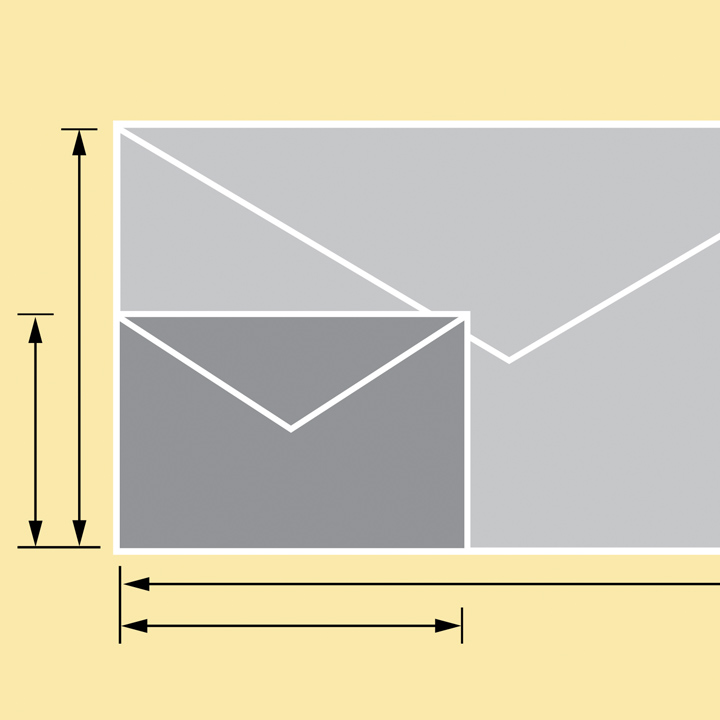
Designers Toolbox is a collection of resources worth a look. It provides quick reference to topics such as envelope, pocket folder, and DVD/CD cover and label dimensions, standard stock sizes, lists of HTML characters, proof reading marks, and so on. They also offer a variety of paid products and services. All nicely designed.

Designers Toolbox...
In the Ideabook Design Store: Templates for InDesign, QuarkXpress, or PageMaker...
Feb 8
Photography
Here is a stunning collection of 360 panoramas. I'm somewhat surprised we haven't seen this technology used more in conventional web design. (You typically see them used to tour a house or an automobile interior.) Have any suggestions?

360icon spherical HDRI panoramic photography...
More on the process and tools at panoguide.com...
In the Ideabook Design Store: Design-It-Yourself: Graphic Workshop...
Feb 6
Typography
I have been a Tim Girvin fan for many years. He has long been one of the premiere calligraphers in the world. So I was excited to see his name on Will Sherwood's blog a couple of weeks ago—it was a real blast from the past. What I found is that there is nothing “past” about this innovator. His work is at the forefront of design and his knowledge of marketing and branding is second to none.

Tim Girvin's visual world...
His blog...
Feb 4
Illustration
For our purposes, I am more interested in the expression of this idea than in the idea itself. Not that I think it is a bad idea, just that I am so impressed by the spirit in which it is discussed and illustrated—with such enthusiasm.

Nick Sherman's Modern Day Type Specimen Book...
Another well-illustrated article...
Feb 1
Web Design
Jesse Bennett-Chamberlain is among my favorite designers. I have used some of his web page structure ideas recently in my own work. His layouts are simple, elegant, and accessible. Here, he shares a behind the scenes look at the development of a web for Embrace Pet Community.

Embrace Pet Community web design...
More from his portfolio...
Jan 30
Marketing PR
This wonderful little site reminds me of a passage from Ogilvy On Advertising. In it David Ogilvy recommends you “Write your copy in the form of a story.” Among the examples he sites is one written by John Caples for International Correspondence School under the headline, “They Laughed When I Sat Down at the Piano—But When I Started to Play...”
Onesentence.org offers a sound lesson in writing. As host Ryan MacMichael describes it, “It is about telling the most interesting or poignant story possible in the least amount of words.” To you and me, the challenge is to take the lessons learned here and apply them to writing copy.

Telling a story in brief...
Jan 28
Color
I happened upon truthdig.com recently and was impressed by their color palette (my interest is entirely apolitical). It uses a wide range of muted colors to visually organize the subject categorys—A/V BOOTH, ARTS & CULTURE, REPORTS, and so on. Click on a subject and you'll see the designer carries the color into the category section. Notice how the background colors of each article darken as you scroll down the page—giving you a sense of a difference between the top and bottom of the listings—another nice touch.

The truthdig.com color palette...
Jan 25
Learning
I just got a birth announcement that I am eager to share. Will Sherwood, principle of The Sherwood Group, has kicked off a blog in the last few days titled “Success Secrets of the Graphic Design Superstars.” If that doesn't get your attention (got mine), the list of designers he interviews will. Interviews with Petrula Vrontikis, Luba Lukova, and Andrea Cutler are posted now and upcoming are interviews with others such as Milton Glaser, Ivan Chermayeff, Bill Cahan, Noreen Morioka, Dave Mason, Rick Valicenti, Mike Salisbury, Woody Pirtle, Stan Richards, Chip Kidd, Kim Baer, Mirko Ilic, Jennifer Morla, Margo Chase, Steve Wedeen, and so on.
What is so enticing to me is that the questions are being posed by a designer who knows what he's talking about. We're going to get a different type of information than we would from someone who is simply an interested interviewer. Don't miss it.

Success Secrets of the Graphic Design Superstars...
Will's design credentials...
Jan 23
Graphics Tech
I have been using Basecamp for a few months now and I recommend it without reservation. In short, it is a collaboration tool that allows you to easily create a separate, password protected project center for each of your clients. You simply add a new section for the client and Basecamp automatically invites them (via e-mail) to enter the project center. The space resides on Basecamp's server, but it is branded with your organization's name and logo.
Your Basecamp subscription includes space for multiple projects and provides the tools for managing jobs, interacting with clients, editing copy, sharing files, and so on. It is a truly elegant solution. Thanks to my friend, web developer and designer Jesse Gardner of plasticmind.com for pointing me to it.
Having read the comments, let me add this: This experience also punctuated one of the fundamentals of marketing—less is often more. Basecamp is a product of 37signals, a true web innovator. Their philosophy states: “We believe most software is too complex. Too many features, too many buttons, too much confusion. We build easy to use web-based products with elegant interfaces and thoughtful features. We’re focused on executing on the basics beautifully.” They deliver just that. I never would have tried Basecamp had it not been for the simplicity and elegance of the interface. It looked usable to me and, more importantly, to my clients.

Take the Basecamp tour...
Jan 21
Ideas 101
We expect to see type in two dimensions—flat on the page. The proliferation of type shadows in recent years has had a profound impact on both print and web design. Today we regularly see words that are animated, distorted, made transparent, and so on. Here is yet another basic idea that needs pointing to: the technique of recasting words as objects. The purpose of these 3D posters is to recruit designers. I can't imagine anyone, who happens on them, missing their message.

Make words into objects...
Another example (-1MB PDF)...
Jan 18
Typography
Why does a guy from the United Kingdom move to Japan to write about letters cut from German potatoes (01/13 post)? To explain it, John Boardley, the voice of ilovetypepography.com, invokes the words of type designer Eric Spiekerman, “I can’t explain it; I just like looking at type. I just get a total kick out of it. Other people look at bottles of wine or whatever...I just get kicks out of looking at type.”
Boardley offers a refreshing look at typography, both serious subjects and the simple joys of form and expression.

John Boardley's ilovetypepography.com...
Jan 16
Print Design
Ask any author, publisher, or bookseller—a book cover design can have a dramatic effect on the interest in and sales of a book. It is considered so critical to sales, cover design is almost exclusively under the control of the publisher—yes, even for design-oriented books. Needless to say, I have great respect for those with a talent for finding the essence of a few hundred pages and presenting it in one compelling, provocative image. Designer and illustrator Ben Gibson has a real talent for it.

Ben Gibson's portfolio (1MB PDF)...
Gibson's web...
Jan 14
Print Design
Have you considered integrating icons into your print design? Here's a nice example from Gardner Design. I guess Bill Gardner, principal of Gardner Design, is a bit of a business card icon himself. In addition to being a talented designer, he is the creator of LogoLounge.com, a top-tier resource for exploring the current state of logo design.

Business card icons...
The Logo Lounge...
Jan 11
Typography
There are understood “rules” in all disciplines of graphic design. In typography, there are widely accepted practices for the leading of lines, the kerning of individual characters, how and where lines of type should break, and so on. This example shows how you can base a design on defying those rules. Designer Miguel Ripoll demonstrates his keen understanding of type by transforming headlines and subheads into word illustrations.

Breaking typesetting rules...
Ripoll's portfolio...
Jan 9
Learning
Rouxbe.com is a site that will teach you some of the finer points of cooking. It uses video tutorials to walk you through each step of a recipe showing you specifics about details such as the consistency of chopping necessary and so on. I think it is a particularly strong instructional model—simple to use and easy to navigate.

Rouxbe.com...
Jan 7
Web Design
ShopComposition.com is a retail store web site that demonstrates some different ways of doing things. I doubt you will buy into all of the navigational bells and whistles—I find some are not intuitive—but it will certainly get you thinking. Thanks to my friend Daniel Will-Harris for pointing me to it.

ShopComposition.com navigational ideas...
BTW, do you know Daniel Will-Harris? If you don't, you're in for a treat...
Jan 4
Web Design
Jeff Bridges is not only a talented actor, he has an eye for design. His web is a series of sketches and handwritten notes that (to me) make him seem friendly and accessible. Thanks to Sharon Carro for pointing us to his work.

Jeff Bridges' Sketchpad...
Jan 2
Photography
If you are not yet familiar with HDR (high dynamic range) photography, here are some images and tools to pique your interest. An HDR image is photographed using a range if exposures that are then converted to form a composite. The resulting image provides a more complete range of information than a conventional image and gives the artist far more control over the range of shadow and light, the manipulation of color, and the application of effects. So much more control that I think of some of these examples as more illustrations than photographs.

Pete Carr's tutorial for creating composites using a conversion tool called Photomatix...
Ryan McGinnis's tutorial for creating composites using Photoshop...
More example by Michael Seljos...
Dec 31
Web Design
Move the mouse cursor over the text that reads “GRAMMY NEWS”—instead of highlighting the text, the designer applies a soft glow to the background. A very subtle, effective technique I have not seen before.

Move the mouse cursor over the text that reads “GRAMMY NEWS”...
Dec 28
Web Design
McMaster-Carr boasts over 450,000 products. Their site is a great example of simplicity and usability. The austere design and limited use of images gives it a matter-of-fact look and feel. Be sure to play with it to see how subcategories, listings, and ordering are handled. Yes, it is extreme but I admire their willingness to stay lean.

The McMaster-Carr catalog...
Dec 26
Illustration
Easier said than done. Why would an illustrator of the caliber of Michael Halbert share the secrets of creating scratchboard illustrations? I suspect because it will convince you to hire someone like Michael Halbert—he demonstrates that it isn't easy. These in depth tutorials are a real treasure.

Michael Halbert's Scratchboard tutorials...
Halbert's portfolio...
Dec 24
Color
Black and white is beautiful. The limited use of color combined with a series of powerful black and white images builds the story-quality of this site.

A great example of a “less is more” palette...
Dec 20
Print Design
I like the way the illustrator integrates the real with the unreal. The question I ask myself is, “How can I use the same idea in my own work?”

The studio is SifonDG in Argentina (you may need to click the image to enlarge it)...
Their portfolio (nice stuff)...
Dec 19
Illustration
John Grimwade is among the top information illustrators on the planet. You may have seen his diagrams in Condé Nast Traveler, his icons in Fortune, or his maps in Popular Science.

A diagram example...
A map example...
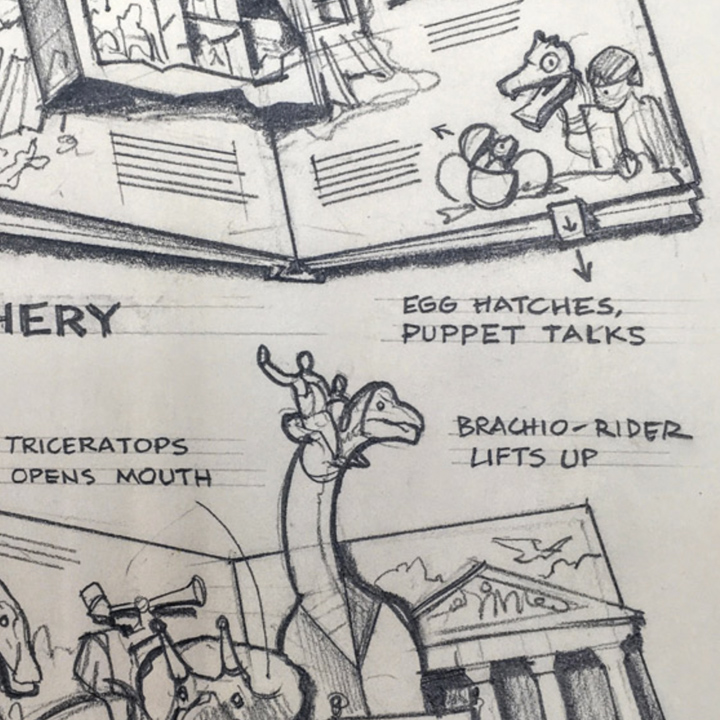
A rough sketch of a project in the works...
John Grimwade's front door...
Dec 17
Typography
Here is a handy little CSS generator for playing with typefaces, sizes, and colors. You adjust the settings until you find just the right combination then click “Generate CSS” to create and capture the code.

Typetester...
Dec 15
Web Design
Appears that the stress of the Christmas season has reached the folks at FutureMedia. If you have anything to do with web design, you'll appreciate this rather unconventional interactive holiday card.

It's a bit different...
Dec 12
Illustration
If you've been reading for a while, you know I'm a big fan of “different”. Frank Maier's illustrations are so familiar, they look different. Reminds me of early vector drawings that, because of the limitations of the software, were necessarily simplistic. No limitations here, just interesting, clear concepts and imagery.

One example...
Maier's portfolio...
Dec 10
Typography
As publisher FontFont tells it, “It took three years and three designers to develop FF Meta Serif. ...Erik Spiekermann made several attempts at designing a counterpart for his groundbreaking FF Meta. He recommended Swift, Minion, FF Clifford, and others, until he realized that he should just buckle down and draw his own serif Meta. True to his principle of collaboration, Spiekermann enlisted the help of accomplished type designers Christian Schwartz and Kris Sowersby.” Gimme.

Meta Serif by Spiekermann, Schwartz, and Sowersby...
Spiekermann's blog...
Schwartz's site...
Sowersby's site...
Dec 7
Graphics Tech
My word processor is heavy—bloated with all types of complexities that I never use. In fact, I seem to spend more time finding and disabling features than I do enabling them. Enter Buzzword. Adobe just bought this elegant little gem so it may be going somewhere. Not only can you perform all the basic word processing tasks, you can also invite others to collaborate.

Buzzword...
Dec 5
Illustration
The story goes like this: Charles S. Anderson inherited a substantial collection of original artwork from retired commercial artist Clyde Lewis. Lewis had spent his career producing advertising illustrations for everything from matchbooks to menus. That collection was the catalyst for what today is one of the most unusual and lauded stock art libraries. Much of it is rights-managed versus royalty-free (meaning the licensing cost of images is calculated on the basis of how you intend to use it). But even if you don't have a project in mind, do yourself a favor and take a look. Keep it in your back pocket for future use.

The collection...
Switch over to Anderson's design studio to see some of the images in use...
Dec 3
Print Design
“Similar Diversity is an information graphic which opens up a new perspective at the topics religion and faith by visualizing the Holy Books of five world religions.” As I understand it, they used a programming tool to search the texts and to calculate the connections between them—the number of times particular terms are used and so on. What I want to point to is the overall design—how the artists use proportion and color to communicate the results.

Similar Diversity...
Nov 30
Illustration
Illustrator Mark Fisher explains “On the weekends I am the night watchman at a large old Civil War era mill complex that has been converted to business and office space. Alone from midnight to 8 am I draw and sketch in between my rounds. Sometimes while drawing I will suddenly awake and find odd lines or blobs that happened while I dozed off. I leave most of those accidents in the art.” The resulting illustrations are on his drawger.com site.

Mark Fisher's somnambulistic sketches...
Nov 28
Print Design
The Turner Duckworth design studio uses an innovative, build-it-yourself company brochure. As you browse the projects in their portfolio, you are invited to click on an “Add to brochure” icon and in doing so, add that project to a downloadable PDF brochure. The final version includes an orientation and a back cover. Very interesting.
To see how it works, choose “Portfolio,” select an item, then click the “Add to brochure” icon at the top right. After you have added a couple of projects, choose "Brochure" from the menu then click “download brochure” to see the resulting PDF.

Choose "Portfolio," select an item, then click the "Add to brochure" icon...
Nov 26
Graphics Tech
There is good news for all of us who have tried (in vain) to explain that you can't create a billboard using a half-inch logo from a web page. VectorMagic.com, a research project by James Diebel and Jacob Nordapart at the Stanford University Artificial Intelligence Laboratory, allows you to import a low-quality pixel (bit-mapped) image and create a vector image from it. (Thanks to my friend Sheila Hanchard for sharing this.)

VectorMagic.com is a sophisticated, easy-to-use tracing tool. Some samples...
The VectorMagic.com cover...
Not 100 percent clear about the distinction between bit-mapped and vector? Here is an article I wrote to explain it...
Nov 23
Illustration
To me an innovator transforms some aspect of the world around them into something it would not otherwise be. They use their skills and talents to add something useful and positive to the conversation. Artist and illustrator James Gurney it that type of innovator.

Gurney transforms his world into this world...
And he tells us all about the process here...
Nov 21
Marketing PR
That's one of three fundamentals Brian Clark points when describing good copywriting skills. The other two are, “It’s also not about being contrived or cheesym,” and “It’s absolutely not about inappropriate high pressure sales techniques that simply don’t work.” That sage advice is the foundation on which copyblogger.com is built. It offers a unique angle on copywriting with a major in marketing and a minor in blogging.

A good introduction to the site: Copywriting 101: An Introduction to Copywriting...
A list of headline formulas...
Nov 19
Illustration
If computers were to disappear tomorrow Randy Glass would still be in business. As he explains it, “All of my illustrations are hand-drawn (no computer enhancement).”
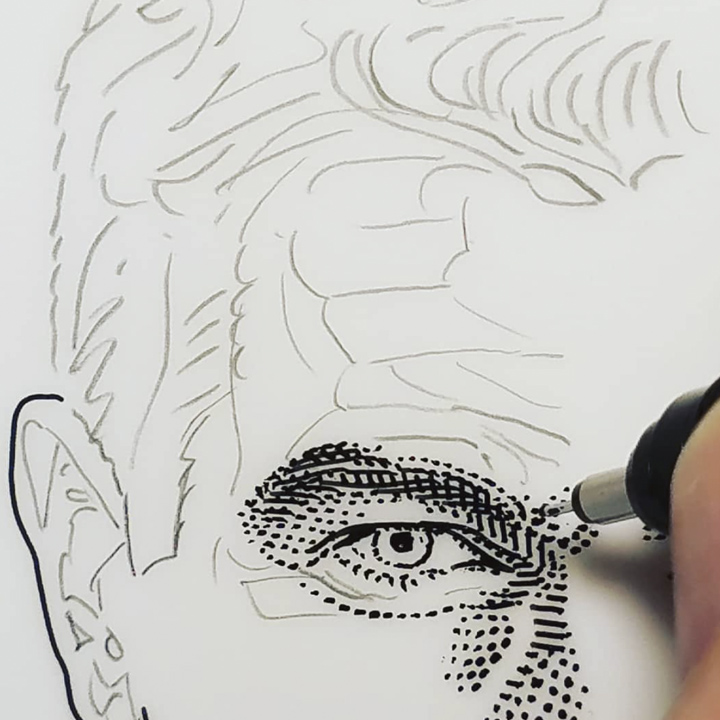
Glass is a master of, among other techniques, stippling—defined as the process of “marking (a surface) with numerous small dots or specks.” A technique that is especially favored in the newspaper world—where paper quality sometimes adversely effects reproduction quality (a well executed stippled image prints more clearly). He, like Noli Novak (mentioned in a Feb 14, 07 posting) also produces the stippled portraits made famous by the Wall Street Journal.

A product shot...
A gallery of his WSJ illustrations. Check out how the dots radiate from the eye (center portrait)...
Nov 16
Packaging
Great labels stop you in your tracks. Sometimes they show outcomes, sometimes they tell a story, sometimes they have a life of their own. Two wonderful examples:

The SuperThrive label design...
The Dr. Bonner's Magic Soap labels...
Nov 13
Photography
I'm honored to have been invited to help judge The Crestock Photoshop Contest for 2007. There are four rounds with different themes. Looks like a lot of fun and they are offering an impressive lineup of prizes—one for each round.
Crestock is a high-end “microstock” provider of royalty-free images contributed by a worldwide network of photographers, illustrators, and designers. If you have not seen it, I guarantee you will want it on your list of resources.

Details about The Crestock Photoshop Contest for 2007...
The judges...
The Crestock Collection...
Nov 12
Web Design
Nessim Higson presents a very interesting use of Flash on iamalwayshungry.com. The layout changes and elements are repositioned as you resize your browser window or click parts and pieces of the design.

Nessim Higson's iamalwayshungry.com...
Nov 9
Graphics Tech
My friend Charles Boisvert points us to a wonderful example of how innovative presentation enhances the communication of statistical data (and everything else). Meet researcher Hans Rosling. He uses his Tendalyzer software to tell a story about the developing world. (It is said that Rosling met the founders of Google an TED and sold them the software.)

Rosling's presentation at TED...
Here is the actual graph...
Nov 6
Graphics Tech
For 15 years now Jay Nelson has edited this gem of a publication featuring an eclectic mix of insights, tips, news, and how-to on the business, craft, and technology of graphic design. To do it, he mines a mountain of information and refines it—the result being enough relevant, interesting, "Hey, I didn't know that," stuff that even the industry elite are willing to ante up.

Here's a free sample...